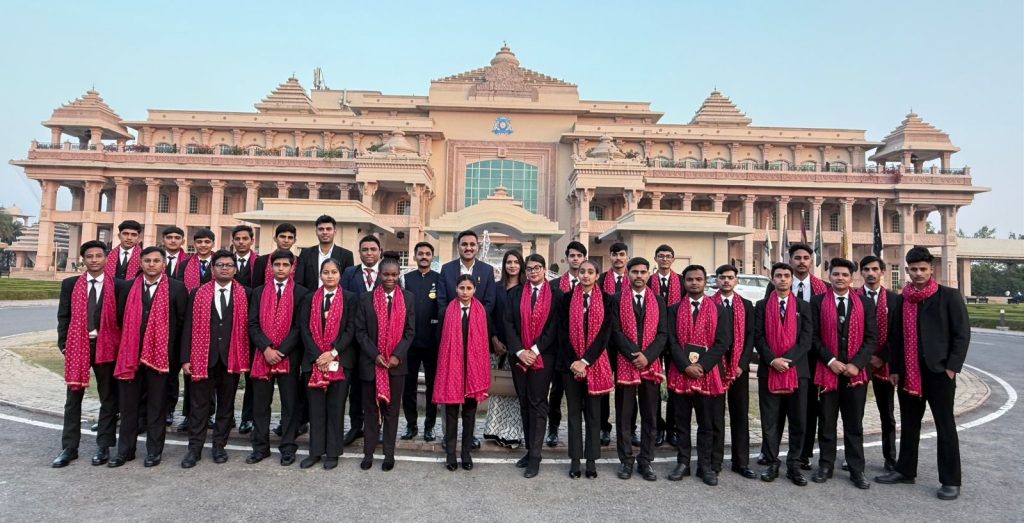
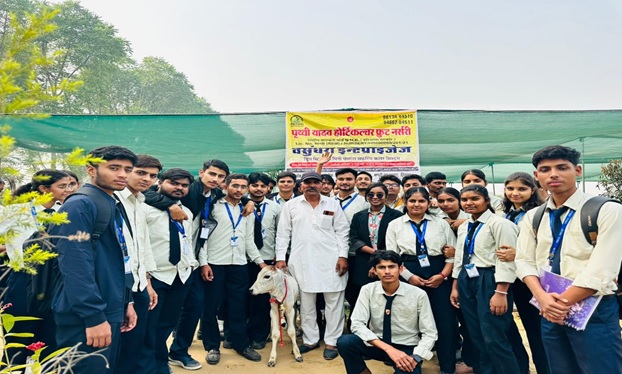
Itinerary of the Day
Morning Session: Supreme Court Visit
- Arrival and Briefing:
- The group arrived at the Supreme Court of India around 10:00 AM. They were greeted by the court’s administrative staff that provided a brief introduction about the court, its history, and its functioning.
- Tour of the Courtroom:
- The students were taken on a guided tour of the main courtroom where they observed a live hearing. The students had the unique opportunity to witness the judicial proceedings of the highest court in India, where landmark cases were being heard.
- The students were introduced to the concept of Public Interest Litigations (PILs), as well as the role of Chief Justice and other judges in the court system.
- The guide explained the judicial structure, the case flow, and the specific jurisdictions of the Supreme Court, emphasizing its role in constitutional matters.
- Q&A Session:
- A Q&A session was conducted after the courtroom visit where students asked questions related to the judicial process, the types of cases heard by the Supreme Court, and the career opportunities within the judiciary.
- Some key questions included topics on judicial independence, court procedures, and recent judicial reforms in India.
Supreme Court Museum Visit:
- Exploration of the Museum:
- The Supreme Court Museum, which is an integral part of the institution, was explored after the courtroom session. Students were guided through the museum, which houses an array of historical documents, old photographs, and manuscripts that trace the evolution of the Indian judiciary.
- Special attention was given to exhibits related to the Constitution of India, landmark judgments, and the role of key judicial figures such as Dr. B.R. Ambedkar, the framers of the Constitution, and other eminent judges.
- Notable exhibits included:
- The original draft of the Indian Constitution.
- Courtroom designs and architecture from the early years of the Supreme Court.
- Artifacts from landmark cases.
The museum provided students with an educational experience that bridged the theoretical knowledge they had gained in classrooms with practical historical context.
Lunch Break:
- The students had a lunch break at the Supreme Court canteen before heading to their next destination.
Afternoon Session: Tis Hazari Courts
- Arrival at Tis Hazari Courts:
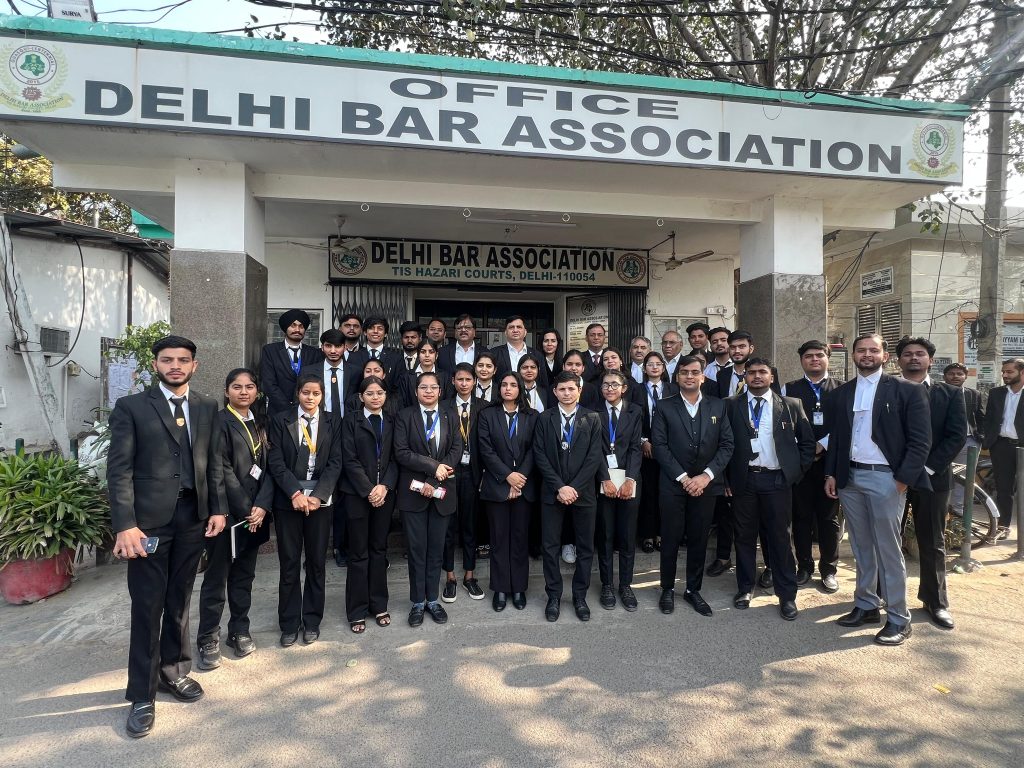
- After the lunch break, the group traveled to the Tis Hazari District Court Complex, which serves as one of the busiest district courts in Delhi. The visit was scheduled to give students a perspective on how lower courts function and interact with the higher judiciary.
- Courtroom Observation:
- The students had the opportunity to observe court proceedings in various district courts, including civil, criminal, and family courts. They were introduced to the role of district judges, public prosecutors, and defense counsels.
- The visit provided a practical understanding of how the judicial system works at the grassroots level, dealing with common cases like petty crimes, property disputes, and family matters.
- Interaction with Lawyers and Court Officials:
- During the visit, students interacted with several court officials and lawyers, learning about the challenges of dealing with legal matters in a busy district court environment.
- Students gained a better understanding of how the Indian judicial system operates on different levels and the types of cases that are typically handled in district courts.
- Exploration of Court Infrastructure:
- Students were shown the functioning of the courtrooms, court records department, and legal aid cells available for litigants. They also learned about the role of mediators and arbitrators in resolving disputes outside of the formal court system.
Learning Outcomes and Observations
- Educational Insights:
The visit to the Supreme Court allowed students to understand the significance of the highest judiciary in upholding the Constitution, while the Tis Hazari Courts visit provided them with insights into the real-world functioning of the district judiciary.
- Practical Exposure:
Students observed live court proceedings, which allowed them to connect their classroom knowledge with real-life judicial processes. The Q&A sessions and interactions with legal professionals offered invaluable learning opportunities.
- Cultural and Historical Knowledge:
The Supreme Court Museum added a cultural dimension to the visit, where students were able to appreciate the evolution of the judicial system and its role in shaping modern India.
- Inspiration for Future Careers:
Many students expressed interest in pursuing careers within the judicial system after the visit. Several were particularly inspired by the work done by judges and lawyers in high-profile cases.
Conclusion
The visit to the Supreme Court of India and Tis Hazari Courts on 1st December 2025 was a highly educational experience for all students and staff involved. It provided a rare opportunity to witness the judicial system in action and learn from experienced professionals. The trip also emphasized the importance of the judiciary in maintaining the rule of law and the administration of justice in India.
The students returned with a greater appreciation for the intricacies of the Indian judicial system and the significant role it plays in shaping the nation’s legal framework. The Supreme Court Museum provided them with a historical context that deepened their understanding of the judiciary’s evolution.